Overdamped Motion
>
>
>
>
The solution consists of two exponential terms when
>
>


![x(t) = `+`(`/`(`*`(`/`(1, 2), `*`(x[0], `*`(`+`(`-`(r), `*`(`^`(d, `/`(1, 2)))), `*`(exp(`+`(`/`(`*`(2, `*`(`+`(r, `*`(`^`(d, `/`(1, 2)))), `*`(k, `*`(t)))), `*`(`+`(`-`(`*`(`^`(r, 2))), d))))))))), `...](images/paper_98.gif)

![x(t) = `+`(`/`(`*`(`/`(1, 2), `*`(x[0], `*`(`+`(`-`(r), `*`(`^`(`+`(`-`(`*`(4, `*`(k, `*`(m)))), `*`(`^`(r, 2))), `/`(1, 2)))), `*`(exp(`+`(`-`(`/`(`*`(`/`(1, 2), `*`(`+`(r, `*`(`^`(`+`(`-`(`*`(4, `*`...](images/paper_100.gif)
![xo := unapply(rhs(%), m, r, k, x[0], t); -1](images/paper_101.gif)

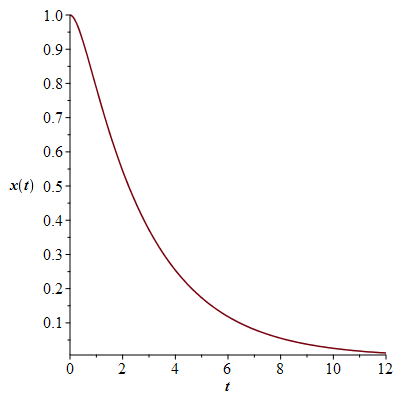
![plot(xo(1, 3, 1, 1, t), t = 0 .. 12, labels = [t, x(t)], labelfont = [TIMES, BOLD, 12])](images/paper_103.gif)